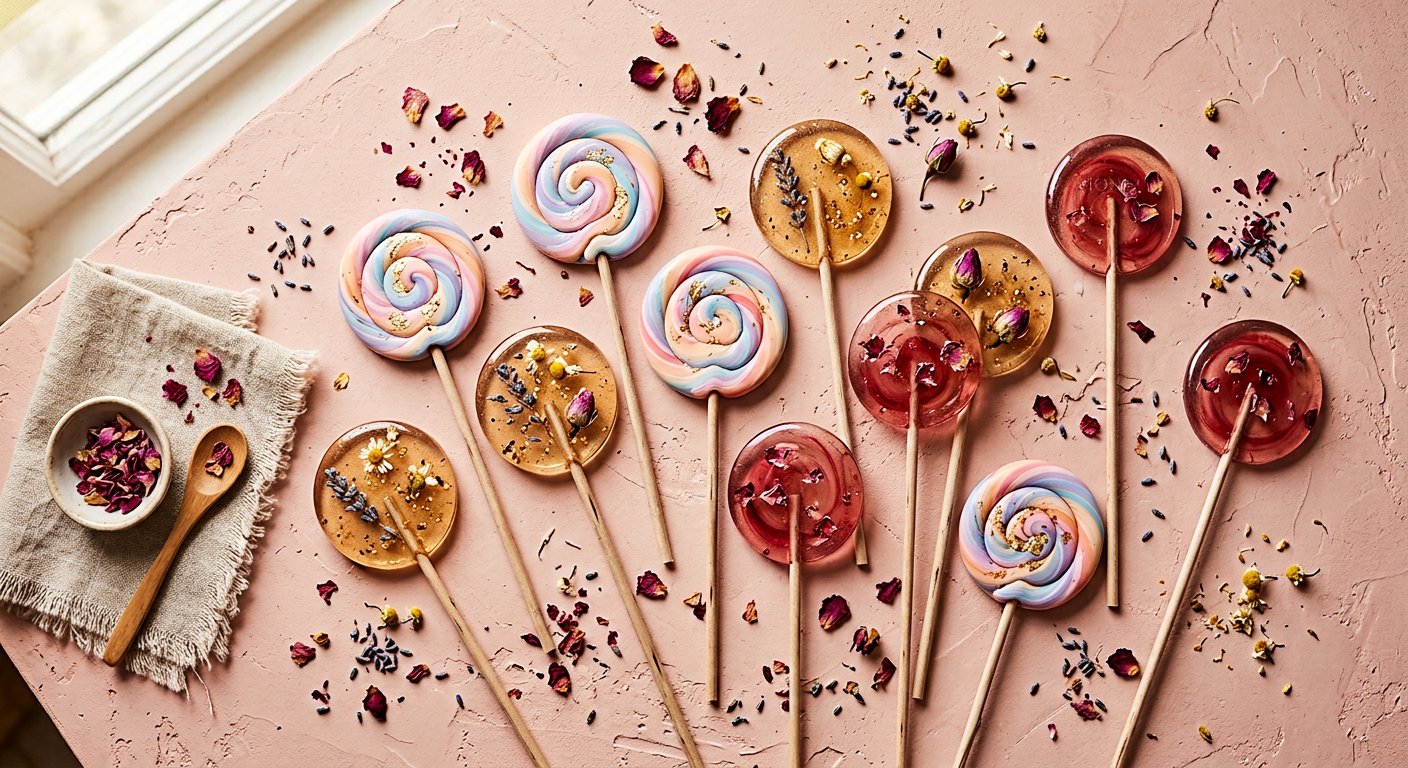
A lollipop is often the first candy someone is handed, and frequently the last one anyone thinks about. That is a shame, because a well-made hard candy is one of the clearest ways to taste a flavor: there is no cake, cream, or chocolate to hide behind, only sugar, water, heat, and whatever you choose to add. At a small studio, that simplicity becomes an invitation to experiment.
What small-batch actually means
Industrial lollipops are designed for uniformity: one mold, one color, one flavor, thousands of identical pieces an hour. A small-batch approach reverses the priority. Sugar, glucose syrup, and water are cooked in a shallow copper kettle to the hard-crack stage, roughly 300°F (149°C), where almost no water remains. The syrup is then divided into smaller pans, tinted, flavored, and poured by hand before it sets.
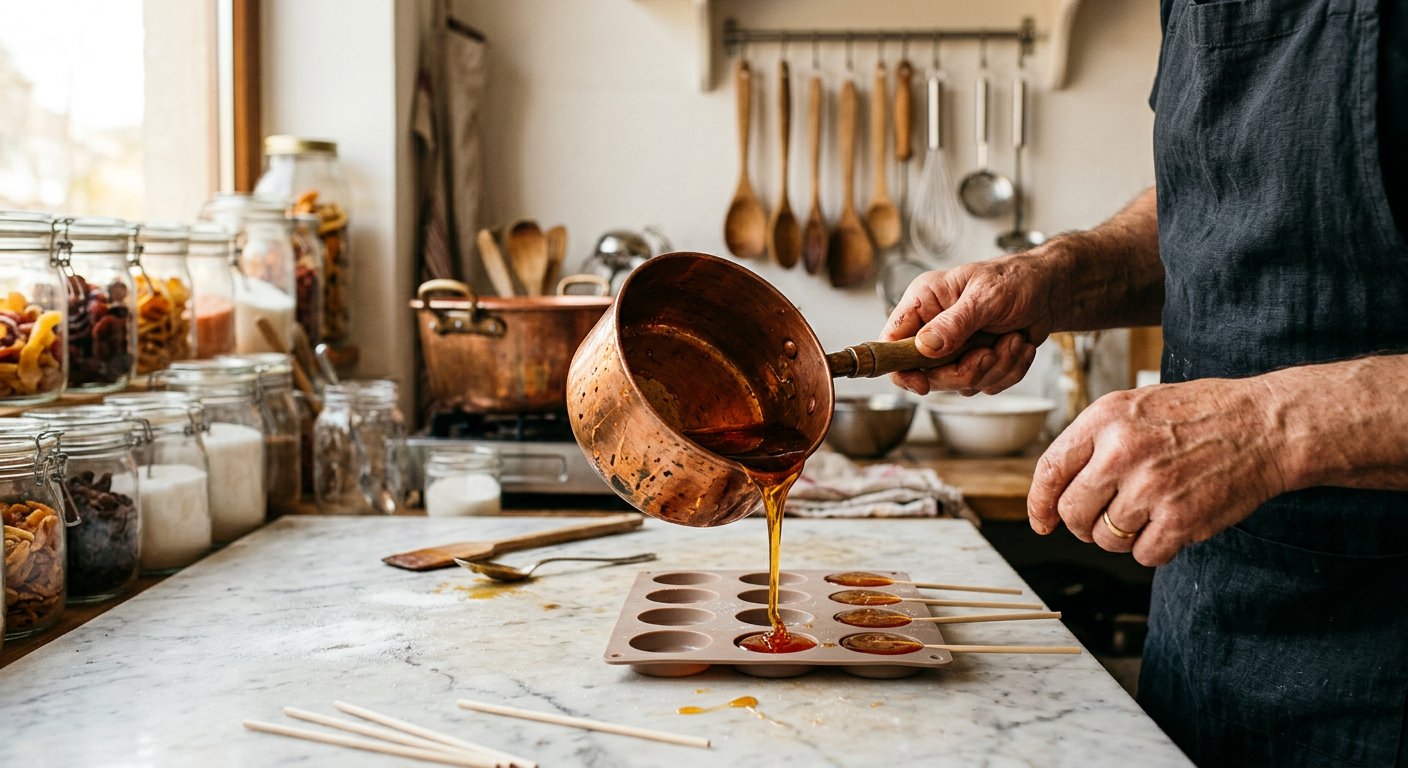
That window is only a few minutes long, which is why the batch size stays modest. Working in small pans means the kitchen can make four or five flavor variations from a single cooking, adjust a swirl that looks too dense, or pull a batch that has picked up too much color. The trade-off is visible in the finished candy: slight differences in thickness, a ribbon that landed off-center, a shade that deepened near the edge of the pan. We treat those differences as evidence of the process rather than flaws to be smoothed away.
Building a flavor palette beyond strawberry
Most candy flavors are built as a single note: sweet plus one recognizable fruit. A more interesting lollipop has a shape to it, a beginning, a middle, and a finish. We think about three layers when developing a recipe: a base that gives body, a bright note that arrives first, and a finish that lingers after the candy has dissolved.
| Flavor | Base | Bright note | Finish |
|---|---|---|---|
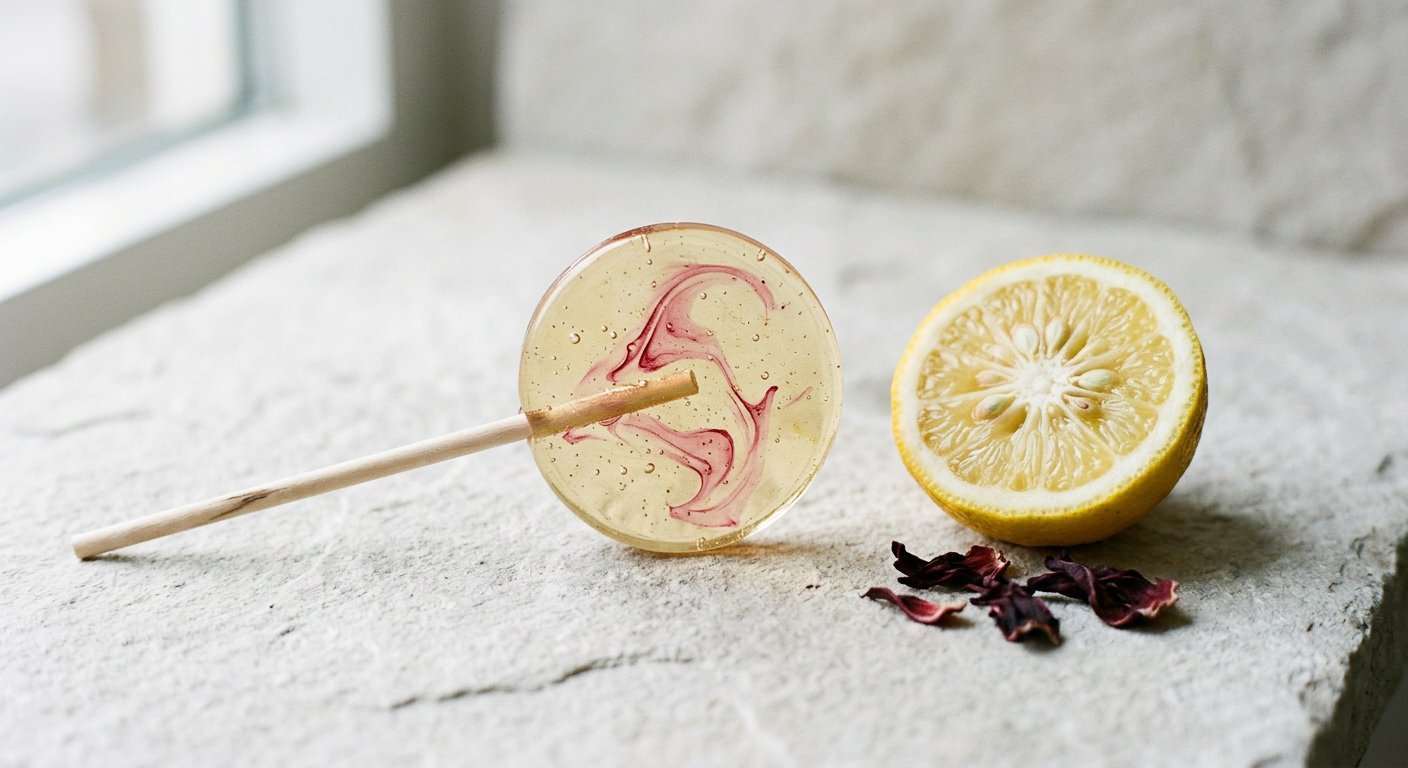
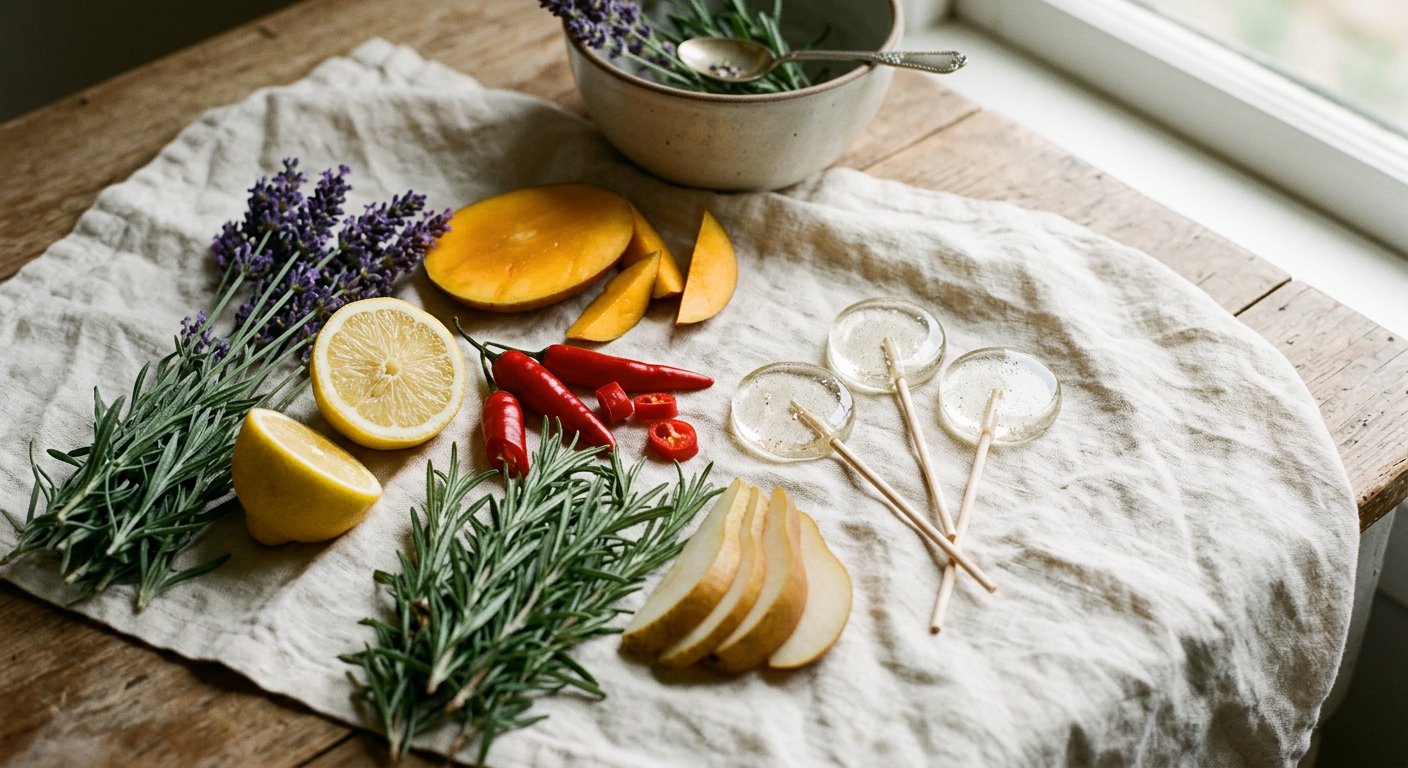
| Yuzu & Hibiscus | Light cane sugar | Yuzu peel, tart citrus | Floral, faintly tannic |
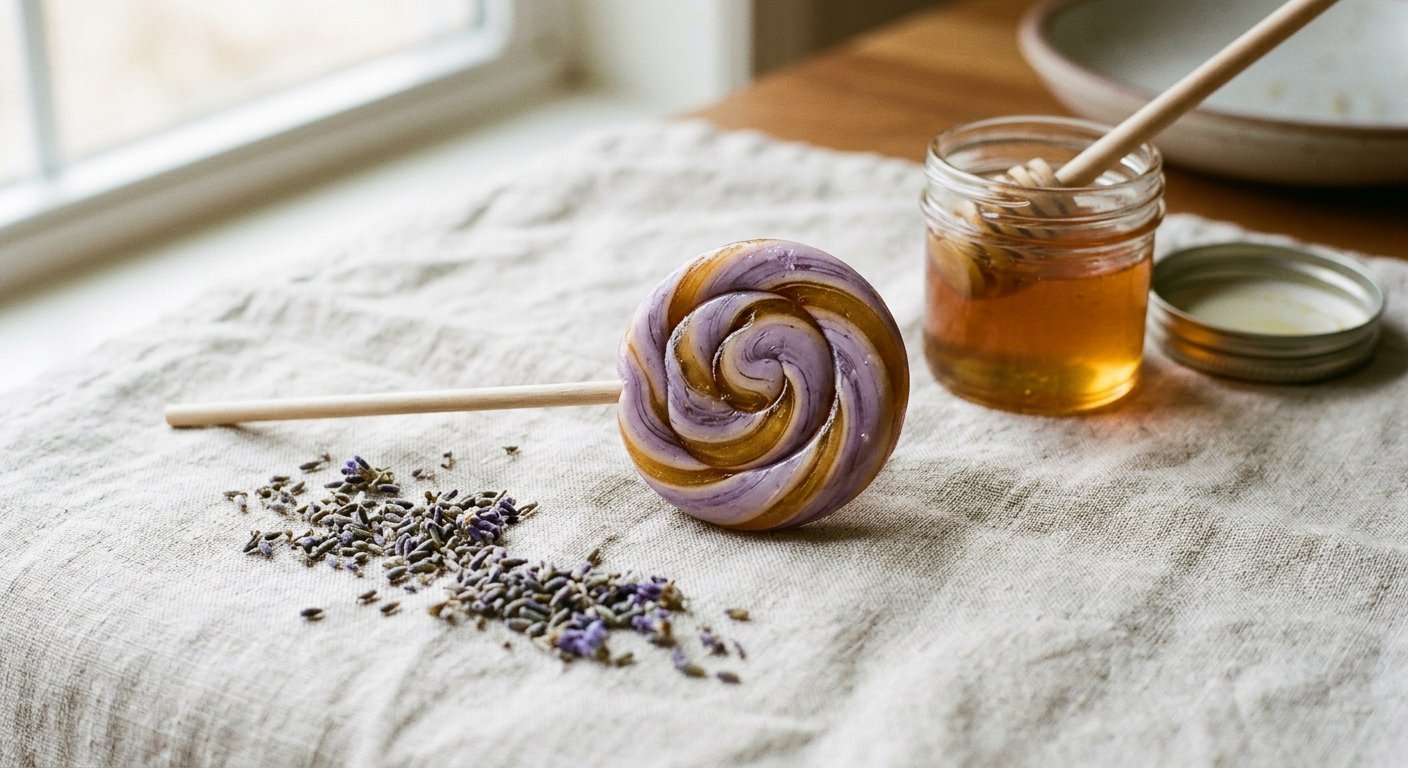
| Lavender & Wildflower Honey | Honeyed sugar | Soft citrus | Dry lavender, herbal |
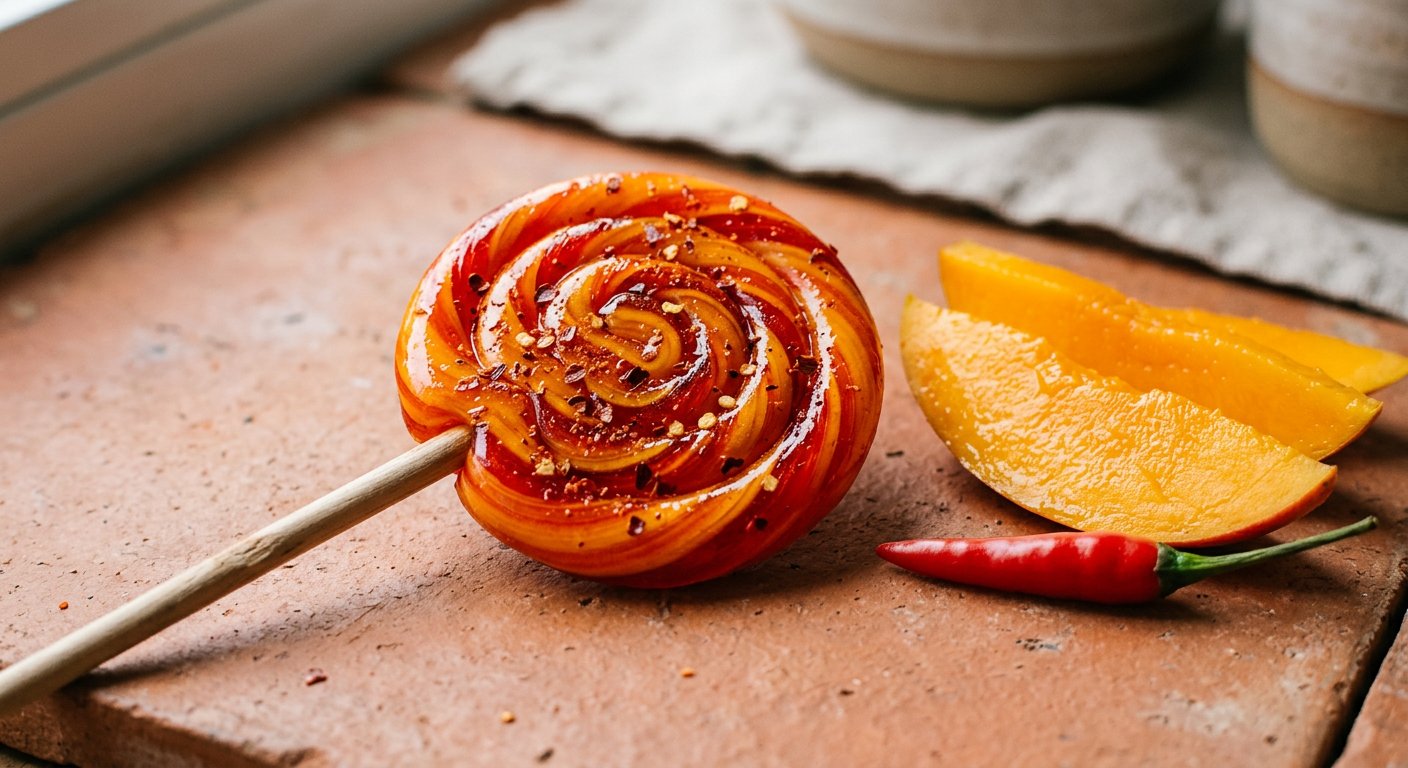
| Chili Mango | Ripe mango purée | Lime and mango | Gentle, warming chili |
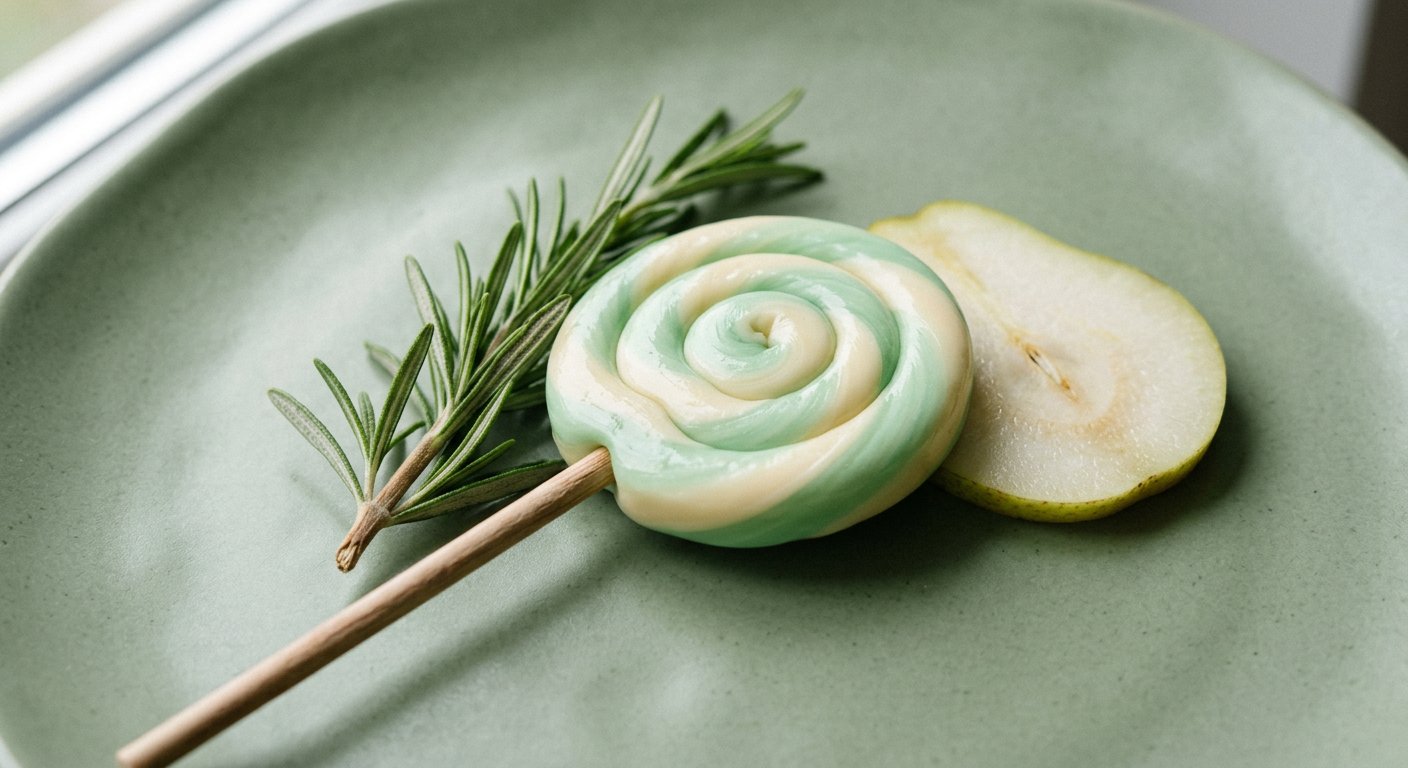
| Rosemary Pear | Pear reduction | Fresh pear | Piney rosemary, clean |
The point is not to be strange for its own sake. A flavor still has to be recognizable on the first taste. Rosemary, for example, turns resinous and soapy if it is steeped too long, so the infusion is timed and tasted before it ever meets the syrup. Chili is added late and in small amounts so the heat arrives after the fruit rather than covering it. Seasonal releases follow the same rule: elderflower and lemon in late spring, smoked salt and caramel when the weather cools, blood orange and thyme in midwinter.
Ingredients, allergens, and transparency
Hard candy has a short ingredient list, and we would rather explain it than decorate it. The foundation is cane sugar, glucose syrup, and water. Flavor comes from fruit purées, juices, peel, infused botanicals, spices, and extracts. Color comes from the ingredients themselves where possible, supplemented with standard food colorants when a swirl needs to stay visible in clear candy.
Allergen and ingredient notice
Our candies contain sugar and are not suitable for everyone. Depending on the flavor and the batch, they may contain or be prepared near milk, soy, tree nuts, and wheat. We do not make medical, dietary, or health claims about any product. A written ingredient card for the current batch is available at the studio counter and by email before you order, and we encourage anyone with an allergy or dietary restriction to read it first.
There is no subscription, no automatic reorder, and no hidden charge attached to browsing this page. If you ask us about a custom order, we reply with the options, the quantity a small batch can support, and the total cost before anything is confirmed. Clear information up front is simply more useful than a long list of superlatives.
A good flavor should be recognizable on the first taste and still interesting on the last.
Notes from the Sugar Petal test kitchen
Swirls, color, and shape
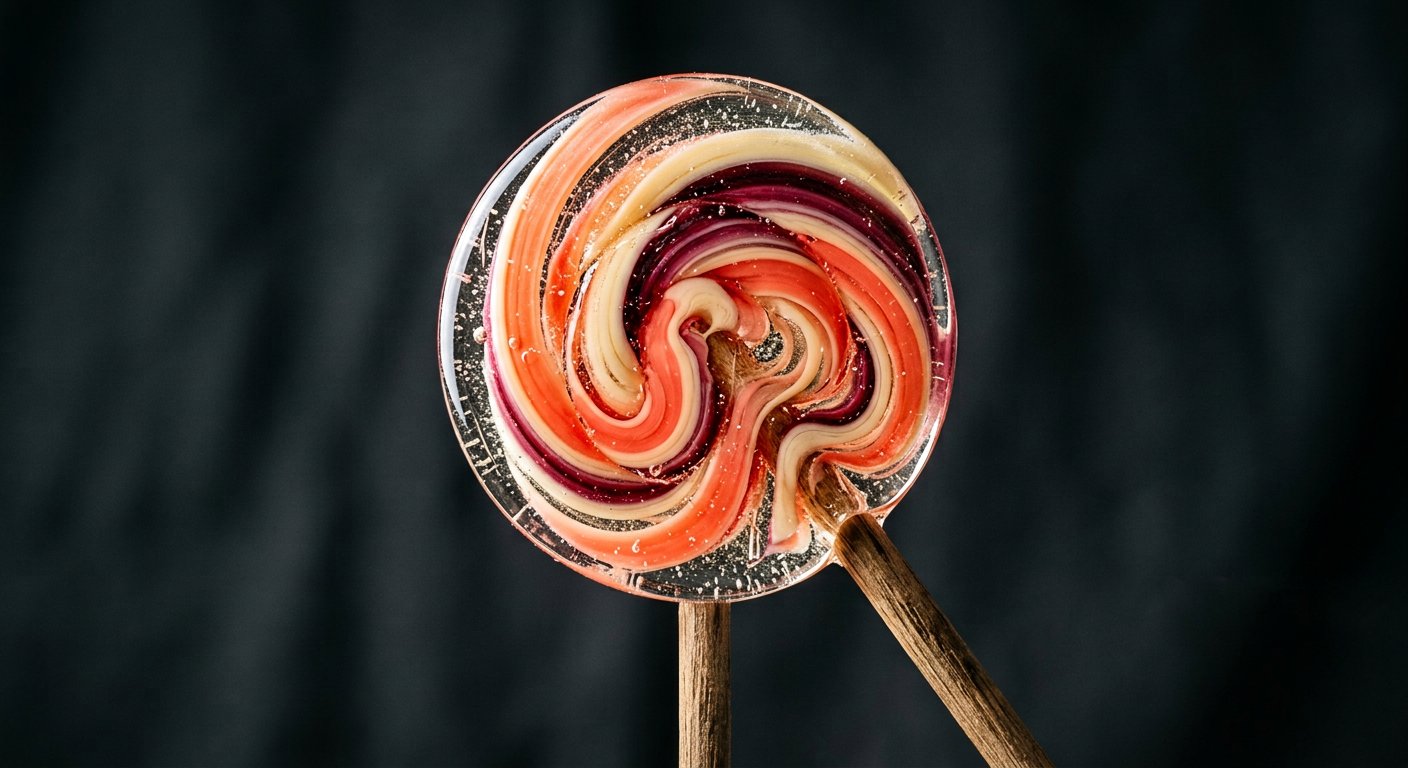
A swirl is made by combining two temperatures and two colors of syrup at once. A thin ribbon of tinted candy is laid onto the clear base, then drawn through with a wooden tool in a single pass. Too many passes and the colors muddy; too few and the ribbon sits on the surface instead of floating inside. Because the candy cools as it is worked, the whole motion happens quickly and cannot be repeated exactly.
Shape is more flexible. Round molds are the standard because they cool evenly, but seasonal runs use oval, flower, and small rectangular forms, and sticks are set by hand. We keep the palette restrained: coral, amber, berry, sage, cream, and a deep red borrowed from hibiscus. The idea is that a box of candy looks like something you could put on a table, not like a shelf of plastic.
Serving, pairing, and storage ideas
- Dessert tables: group one flavor per jar so guests can choose by note rather than by color alone.
- Place cards: a single lollipop with a handwritten flavor tag doubles as a seat marker and a favor.
- Drinks: citrus-forward pieces sit well beside unsweetened tea or sparkling water; honey and caramel notes pair with coffee.
- Gift boxes: mix one familiar flavor with three unusual ones and include the printed flavor card.
Hard candy is sensitive to humidity. Keep pieces sealed in a cool, dry place, away from direct sun, and avoid the refrigerator, where condensation makes the surface sticky. Unopened pieces are at their best within about six months; once a wrapper is open, enjoy it sooner. These are practical storage guidelines rather than a guarantee of shelf life.
Visit the studio
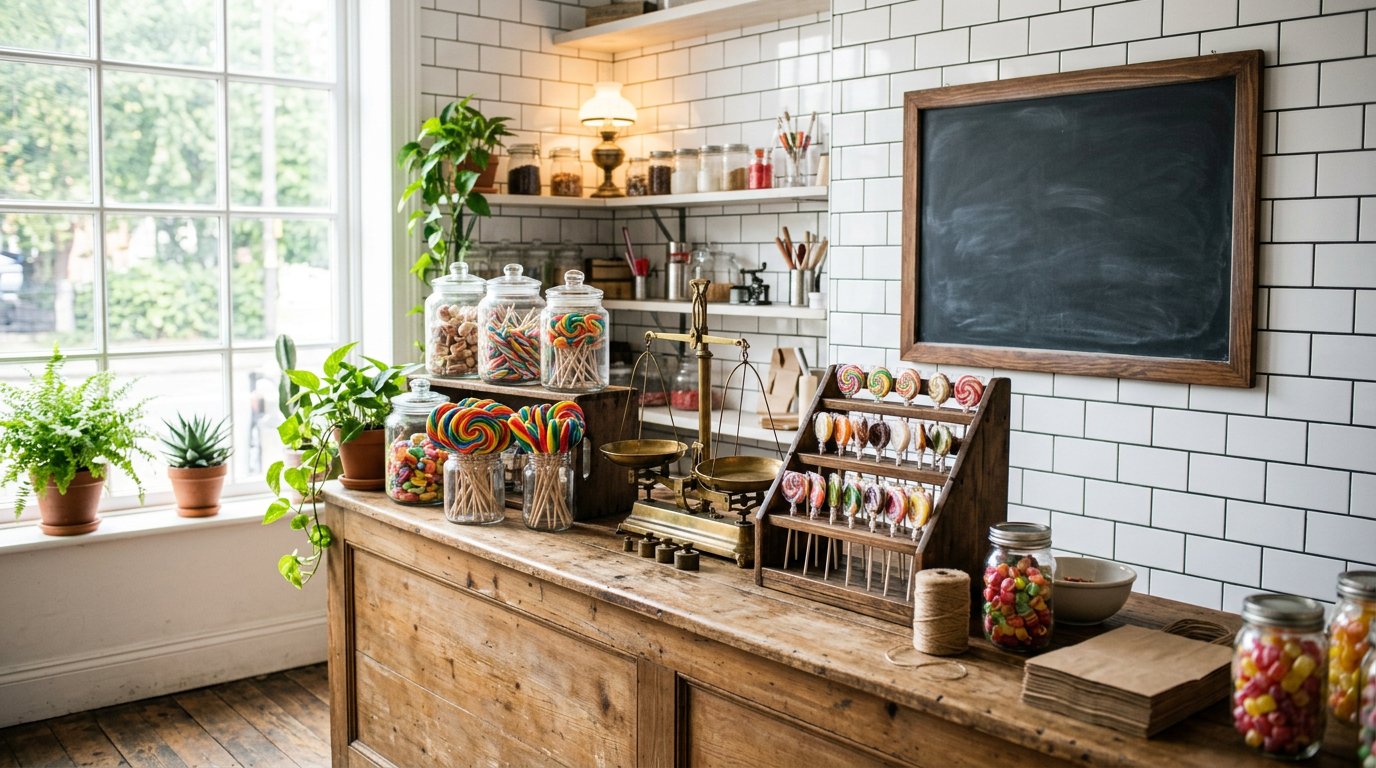
The studio is a working kitchen with a small counter, not a museum. What is in the case changes with the season and with what was poured that week, so the most reliable way to plan a visit is to write ahead and ask for the current flavor list. We are happy to talk through custom colors, large orders, and which flavors travel well in a gift box. Contact details, opening hours, and a short message form are all in the Visit & Contact section below.
Whether you arrive for a single yuzu lollipop or a box of eight different flavors, the useful question is always the same: what does it taste like, and how was it made? If you can answer both, the candy has done its job.